

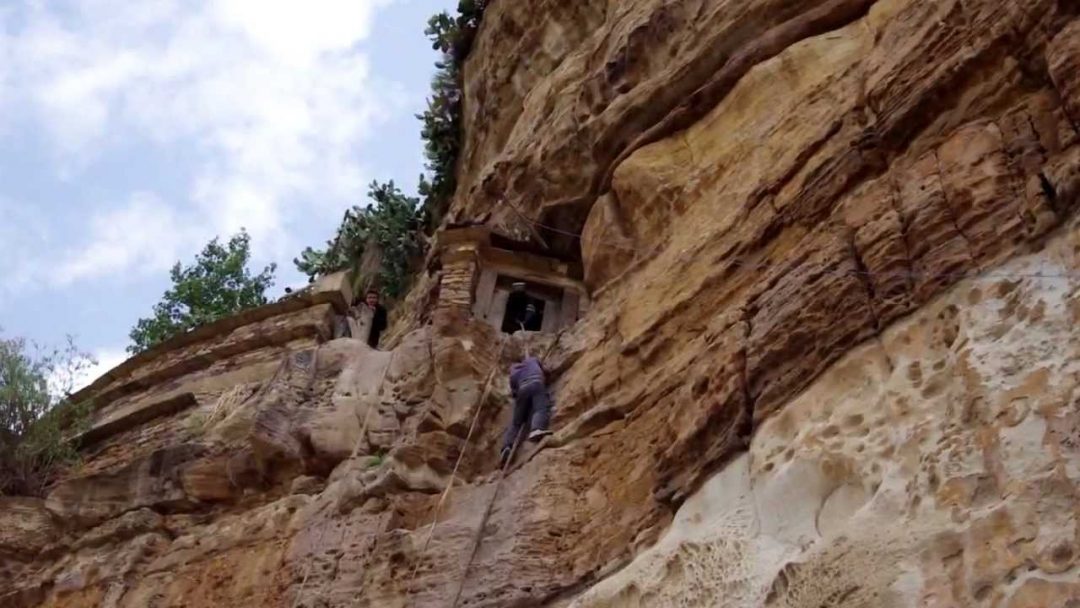
Lungo local tour Ethiopia
Summary: Historical & Tribal visits
Duration: 20 days 19 nights

Day 1
Early in the morning, depart north to Bahir Dar via Debre Markos. On the way, visit the Portuguese bridge, said to have been the first bridge in Ethiopia. Afterwards, you will pass through the spectacular Blue Nile Gorge. The gorge extends nearly 400km and reaches depths up to 1500m. Overnight in Bahir Dar (hotel).
Day 2
In the morning, take a boat trip on Lake Tana to visit a selection of the monasteries hidden on the islands and shores of this sacred lake. Visit the Zege Penninsula and the monasteries of Azuwa Maryam and Ura Kidane Mehret and the island monastery of Debre Maryam near the outlet of the Blue Nile River. In the afternoon, drive out to the Blue Nile Falls for a short hike in the area. Finish the day with the sunset over the lake. Overnight in Bahir Dar (hotel).
Day 3
After breakfast, continue north to Gondar. The four-hour drive will take you through rural villages, offering wonderful insight into the Amhara culture. After briefly settling in your hotel, explore the sites of Gondar, including a visit to the Royal Enclosure, with six castles and several other buildings. Additionally, visit Fasilidas’s Pool, still used for Timket celebrations today, Ras Gimb Palace Museum and the Debre Birhan Selassie church, with the most famous ceiling in Ethiopia. Overnight in Gondar (hotel).
Day 4
Today is an early morning departure to Sankober in the Simien Mountains. From here you will go for an easy hike to the Geech Abyss, where you will see a large waterfall where the Jinbar River plunges into the abyss. This area is also a great place for viewing the endemic gelada baboon, also known as the ‘bleeding heart baboon’ due to the red patch of skin on its chest. Overnight in the Simien Mountains (lodge) or in Debark (hotel).
Day 5
After breakfast, depart north for Axum, enjoying spectacular views of the Simien Mountains. After stopping for lunch in Adi Arkay, proceed driving through the dramatic Tekeze Valley, offering some of the best landscapes in the country. Proceed to Axum, home of the ancient Axumite Empire, the Queen of Sheba, and the Ark of the Covenant. Overnight in Axum (hotel).
Day 6
Today will be a full day visiting the sites of Axum, including the famous obelisks (one that was recently erected after being returned from Italy) and the archeological museum, the Queen of Sheba’s Bath (which supplies water to Axum year-round), Ezana’s enscription, King Kaleb’s tomb, King Bazen’s tomb, and the Queen of Sheba’s Palace. You can also visit the St. Mary of Zion church, where the Ark of the Covenant is kept. Men only are allowed to enter the old church. Unfortunately, no one (except one specially chosen guardian monk) is allowed to enter the chapel where the Ark is kept. Overnight in Axum (hotel).
Day 7
After breakfast, drive to visit the ruins of Yeha, dating from the 8th to 5th centuries BC, and thought to be the capital of Ethiopian civilization before Axum. Afterwards, visit the Debre Damo monastery, where the men (Sorry, no women allowed) must climb up a 15-m rope to enter. Proceed through the state of Tigray, stopping en-route for a visit to the rock-hewn church of Medhane Alem Adi Kesho. Overnight in Hawsein (hotel or lodge).
Day 8
In the morning, visit either Abuna Yemata Guh or Maryam Korkor. Both churches involve an approximate one-hour hike but offer commanding views of the surrounding area. After lunch, continue your visit with the more easily-accessible churches of Abreha we Atsbeha and Chirkos. Afterwards, proceed driving to Mekele for overnight (hotel).
Day 9
Early in the morning, embark on a full day of driving to Lalibela. Here you will pass through several small villages, with typical sandstone homes of the Tigray people. Proceed through this rural area for the stunning approach to the home of Ethiopia’s most prized destination – Lalibela. Overnight in Lalibela (hotel).
Day 10
In the morning, start your tour of the rock-hewn churches of Lalibela, visiting the Northwestern Cluster of churches – Bet Medhane Alem, Bet Maryam, Bet Meskel, Bet Danaghel, Bet Mikael & Bet Golgotha (entry not permitted for women). After lunch, continue with the Southeastern Cluster of churches – Bet Gabriel-Rufael, Bet Merkorios, Bet Amanual, and Bet Abba Libanos. Finally, you will visit the most famous of all the churches – Bet Giyorgis, constructed in honor of the patron saint of Ethiopia – Saint George. Overnight in Lalibela (hotel).
Day 11
After breakfast, visit the nearby monastery of Na’akuto La’ab, set on the side of a cliff. After the visit, proceed driving to Kombolcha via Woldia. On the way you will stop for a rest in Hayk where you can enjoy the views of this stunning lake, visit the local monastery (open for men only) and enjoy the birdlife. Overnight in Kombolcha (hotel).
Day 12
Return driving to Addis via Debre Birhan. On the way you pass the Mezezo Escarpment, with a good chance to see the endemic gelada baboons. If today is a Sunday, you can stop in the town of Senbete to visit the lively market including the interesting camel market. Overnight hotel in Addis
Day 13
Depart south from Addis Ababa via Butajira to Awasa. On the way, we will visit the archeological sites of Tiya (ancient stelae field and UNESCO World Heritage Site), Adadi Maryam (a rock-hewn church similar to those in Lalibela) and Melka Kunture (pre-historic tool-making site). Overnight in Awasa lodge (hotel).
Day 14
In the morning after breakfast, visit the fish market on the shores of Lake Awasa and then proceed driving to Dorze, set in the highlands above Arba Minch. The Dorze people are known for their tall beehive-like houses and their fine cotton weaving. You will visit the village and learn about the daily lives of these industrious people. If today is market day (in Dorze village on Monday and Thursday and in nearby Chencha on Tuesday and Saturday), that will be visited. Overnight in Dorze in traditional Dorze hut (shared toilet facilities) or continue to Arba Minch for overnight (hotel or lodge).
Day 15
In the morning, depart to Arba Minch for a boat trip on Lake Chamo to visit the “crocodile market”, and the local hippos. Afterwards, depart from Arba Minch to Turmi. On the way you will pass through the village of Weyto (market day Saturday), which is home to the Tsemai Tribe. Continue through the Weyto Valley to Erbore, where you will have a brief visit to a local Erbore village (market day is Saturday). Finally, proceed to Turmi, home of the Hamer tribe. At night, you can see the traditional night dancing of the Hamer tribe, known as evangadi. Overnight in Turmi Lodge.
Day 16
In the morning, take a day trip to Omorate to visit the Dassenech tribe. Here you will cross the Omo River by local boat and enter a Dassenech village. Afterwards, return to Turmi (Monday is market day) for a visit to a local Hamer village. If there is jumping of the Bulls traditional Hamer coming-of-age ceremony that will be visited. Overnight in Turmi Lodge.
Day 17
Depart for Jinka, via Dimeka and Key Afar. Tuesdays and Saturdays are marketdays in Dimeka, which is one of the most colorful markets in the area and is visited by many tribes, including Hamer, Benna and Karo. Afterwards, continue to Jinka. Overnight in Jinka Resort.
Day 18
In the morning, drive through the Mago National Park to a local village of the Mursi tribe. The Mursi are known for their lower lip and earlobe plates. In the afternoon, after returning to Jinka, you can visit the South Omo Museum & Research Center to learn more about the local tribes. Alternatively, take a hike in the surrounding hills to visit a local Ari village. Overnight in Jinka Resort.
Day 19
After breakfast, depart from Jinka to Arba Minch via Key Afar and Konso. Thursday is market day in Key Afar, where you will see the Benna and Tsemai tribes trading goods. This is another very popular market in the region. After the visit, proceed to Konso (market days are Mondays and Thursdays). The Konso people are known for their wooden statues, known as wakas, which are erected in honor of dead heroes as well as their innovative agricultural terracing. Today you will have a brief opportunity to visit a local village and the cultural museum displaying many waka statues. After the visit, proceed driving to Arba Minch. Overnight in Arba Minch Ezana Hotel
Day 20
Early in the morning, depart from Arba Minch for a full day’s drive to Addis Ababa. On the way you may have time to visit an archeological site.
My name is lungo (afework bezabhi)
For the above tour price detail:-
Contact lungo right now
AFEWORK BEZABHI (LUNGO)
Web: – www.localtourethiopia.com
E-mail:-lungo.adiss@gmail.com
Skype:-lungo local tour Ethiopia
WATS up:-lungo local tour Ethiopia
Mable: (+251913413740
Face book, linkidin, flikir, youtube, google+Twitter:-lungo local tour Ethiopia
A380 TOUR OPERATOR AND LOCAL GUIDE
Tour Operations Head:-lungo local tour Ethiopia & Tours Services Plc. (founded by Netherlands and run by Lungo from Addis Ababa, Ethiopia) Bole Road Kirkos Sub city, Kebele 01/18, House No 198
AFEWORK BEZABHI (LUNGO) Based on Omo valley & Addis Ababa ETHIOPIA